Art Statement
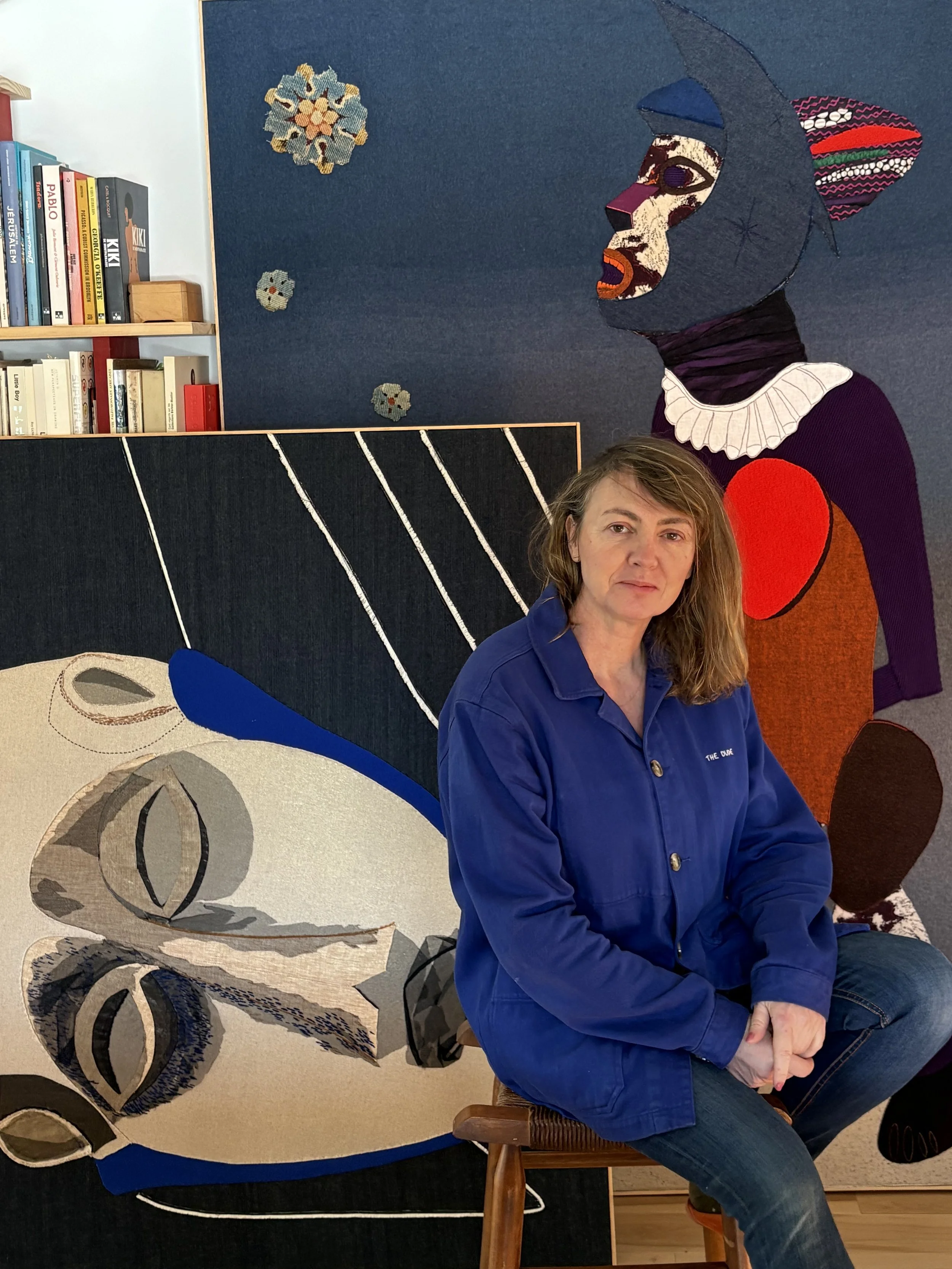
I studied art history and the business of art in Paris, where I later worked for more than six years in a gallery specializing in ancient African art. It was there that my passion began. I was struck by the power of the sculptural forms—their presence, their histories, and the intensity they carried across time. Living with these works daily, handling them, and engaging with collectors shaped not only my eye, but my sensibility.
In 1998, I moved to New York and remained immersed in this field. Alongside admiration, however, came awareness. Many of these objects had been removed—often unjustly—from their original makers and communities. Severed from ritual, geography, and lived meaning, they now inhabit museums, private collections, and markets far from the environments that once activated them. They exist in fractured timelines: physically present, yet culturally displaced.
Questions of repatriation, ownership, and restitution have become central to our contemporary understanding of African works held in Western collections. There is no simple return to origins; history cannot be undone. My work consciously enters into dialogue with this condition. Rather than attempting to restore a lost context, I ask how an artist can respond ethically and creatively to objects that already carry multiple translations—cultural, geographic, economic.
My current series began after a transformative trip to Mexico in 2011, which ignited a desire to breathe new life into objects from bygone eras. I chose fabric and embroidery as my medium. What was once carved in wood through a subtractive, forceful gesture is reconstructed through addition—layering, stitching, accumulation. The shift from sculpture to textile echoes the object’s earlier shifts from ritual object to collectible artifact. My intervention does not erase displacement; it makes it visible.
Many of these works were originally carved by men within systems of transmission and authority often structured by patriarchy. By reinterpreting them through embroidery—a medium historically associated in many contexts with intimacy, patience, and domestic labor—I introduce another body, another temporality, and another form of authorship. While embroidery has also been practiced by men in numerous cultural traditions, its historical place within gendered hierarchies of labor gives meaning to this gesture. The shift is therefore structural rather than decorative. It moves the register of power from force to persistence, from authority to attentiveness. The objects are not diminished; they are re-voiced.
I begin with photographs, encountering the works as images—already mediated, already displaced. I focus particularly on shadow: the trace that suggests presence while signaling absence. I enlarge the forms, often creating oversized compositions. Volume becomes surface. Monumentality becomes suspended softness. The solid carved mass is flattened into textile, yet through scale it regains a renewed presence. This oscillation between loss and reactivation mirrors the objects’ own trajectories across time and geography.
Color becomes movement. Threads in varied tones heighten contrast, animate form, and introduce vitality. Through this chromatic and material transformation, the figures emerge not as static remnants of history, but as agents capable of generating new narratives. They are no longer isolated artifacts, nor ethnographic specimens, nor relics of a distant past. They become part of a layered authorship in which histories intersect: the original sculptor, the communities from which the forms emerged, the histories of displacement, the collectors, and myself.
Since the series Flow and Kiki, movement and narrative have become more explicit. A hand may appear—suggesting the presence of the original maker, subsequent custodians, and my own gesture. These works are not about returning objects to an inaccessible authenticity. They confront their present reality and ask how forms, once severed from their cultural matrix, continue to produce meaning.
My process is meticulous and meditative. As I embroider, time slows and expands. The repetition of the stitch introduces a contemplative rhythm that infuses the work with quiet intensity. Each piece becomes a meditation on time, memory, and transmission.
In my practice, decontextualization is both subject and method. I do not erase rupture; I work through it. Through re-scaling, re-materializing, and re-framing forms, I reveal their displacement and allow them to speak anew.
I cannot undo history, but I remain aware of it. By bringing the past into the present, I seek not to appropriate but to reposition—creating works that hold memory and open space for new narratives.